Six months after I impulse-bought a Porsche 911
What I bought
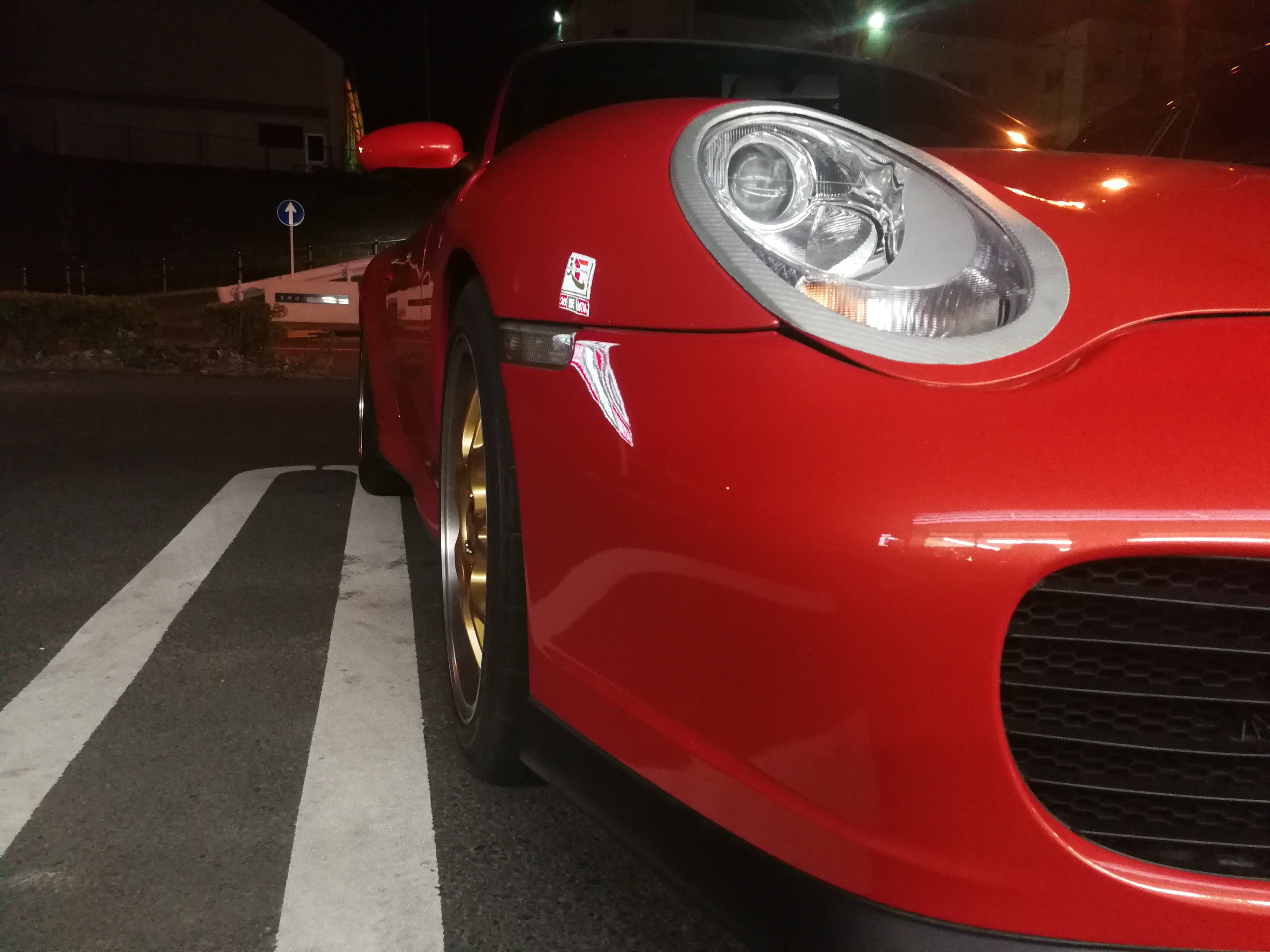
A Porsche 911 Type 996 Carrera 4S, late model, registered in ‘04, fitted with a high-performance kit. Stock output is 320 ps, but the kit bumps it up to 345 ps.

- Drivetrain: AWD
- Engine: 3.6L flat-six, DOHC, 6-speed manual
- Max output: 345 ps @ 6800 rpm
- Max torque: 37.7 kgm @ 4750 rpm
- Length x width x height: 4435 x 1830 x 1295 mm
- Wheelbase: 2350 mm
- Curb weight: 1520 kg
It’s naturally aspirated, but as a 4S it gets the same wide body, stronger brakes, and retuned suspension as the turbo model. The AWD system uses a multi-plate viscous coupling that shifts torque to the front axle anywhere from 5% up to 40%.
The previous owner made a few modifications: a GT3-ish aero kit (with a fixed rear wing) and headlights swapped to the 997 look. The suspension and intake/exhaust appear to be stock. The alloy wheels are aftermarket BBS, with different part numbers front and rear. The intermediate shaft had already been replaced with the reinforced version.
Can an ordinary person actually afford a 911?
The first thing I want to stress is that a 911 is surprisingly attainable. Ferraris and Lamborghinis are basically out of reach for regular people no matter how hard you dig through the used market. Porsche, though, is actually within striking distance. Air-cooled models have gotten pricey for historical reasons, but if you’re fine with water-cooled, the 996 and 997 sit at prices most people could realistically manage — not much different from buying a new mid-range Japanese car. The exceptions are the halo models like the GT2 and GT3 — forget those — and turbo models, which cost more than the NA versions.
The 996 was Porsche’s first water-cooled model, infamous for swapping the classic “frog eye” headlights for the teardrop lights it shared with the Boxster, which drew plenty of criticism at the time. It launched in ‘97, so it’s already a 21-year-old car and arguably a classic at this point, yet its resale value is still holding up remarkably well. There’s a wide range within the 911 lineup, but a basic Carrera with 60,000-100,000 km on the clock can be had for roughly 2.5-4 million yen. Move up to a 997 and the average price jumps noticeably, so I’d argue the late-model 3.6L 996 is currently the sweet spot for value.
Maintenance and running costs
People often say Porsches are expensive to maintain, but honestly they’re built pretty tough. If you keep up with preventive maintenance, I don’t think you end up with the absurd bills people imagine. That said, engine oil is one area where you really do need to stay on top of things and use good oil.
Specifically, the approved oil is Mobil 1 5W-40. A 4-liter jug runs about 4,000-5,000 yen, and an oil change uses roughly 9 liters, so even doing it yourself you’re looking at that kind of cost each time. Running costs are definitely higher than a typical Japanese car, so budget for that. Still, it’s nothing like a Ferrari or Lamborghini where every little thing costs hundreds of thousands of yen. Fuel economy is, unsurprisingly, not great. It improves with each generation — 996 to 997 to 991 to 992 — but for a 996 this old, figure on roughly 5-8 km/L. Oil management deserves more attention here than on an ordinary car, though it’s far better in this regard than the air-cooled models. Also, since it uses a semi-dry-sump system, I’d avoid getting the oil changed at chain stores like Autobacs or a regular gas station.
Genuine parts are also pretty pricey — understandable given the quality, since the stock dampers are Bilstein and the brakes are Brembo. Porsche Center labor rates are steep too. If you’re thinking about buying one, I’d recommend scouting out a reputable independent shop nearby ahead of time — ideally one equipped with a proper Porsche diagnostic tester.
Another mildly annoying point: you can’t buy tires and wheels as a matching set of four, because the front and rear sizes are completely different. Stock is 225/40ZR18 up front and 295/30ZR18 in the rear. The rear tires in particular aren’t cheap at that size, so brace yourself.
Interior
Honestly, it’s a bit underwhelming. For a car with an MSRP north of 10 million yen, you’d hope for more — but then again, it’s a 20-year-old car. The newer 992 has a genuinely great interior, though of course its sticker price is roughly double. The Alcantara headliner and the powered leather seats are nice touches, at least.
Ride quality
The suspension is noticeably stiffer than a typical car. The rear +2 seats are barely more than a token gesture — not a space any adult man would want to sit in for long. Someone around 150 cm tall could probably manage back there. Being a 3.6L NA engine, torque is strong even at low revs — strong enough that you can pull away in second gear from idle without touching the throttle. It has six gears, but they’re tightly stacked; even in sixth, cruising at 100 km/h sits around 2000 rpm. The dampers are probably a bit worn from age, so you feel bumps and manhole covers, but nothing jarring enough to complain about.
The smooth rev build you only get from a naturally aspirated engine, the ample torque of the 3.6L, that distinctive flat-six growl coming from behind you, the glued-to-the-road stability from AWD, the reassurance of a rear engine helping braking performance — all of it adds up to a daily-driving experience that keeps reminding you “Porsche really knows how to build a car.”
The throttle response is so sharp that if you pull away from a stop the way you would in a normal car, the engine revs way more than you expect and it’s hard to move off smoothly. You can actually pull away on clutch alone without touching the accelerator at all, which might even be gentler on the clutch. As long as you’re not on a hill, starting in third gear is entirely doable.
Left-hand drive
Porsche does offer right-hand-drive versions, and honestly I think that’s the better choice. This is my first time driving a left-hand-drive car, and in Japan the downsides overwhelmingly outweigh the upsides. Right turns at intersections are the biggest problem. If there’s oncoming traffic waiting to turn right, it’s genuinely hard to see straight-through traffic coming up behind them — you end up leaning toward the passenger seat and craning as far right as you can. Passing a bus is also tricky. On a single-lane residential street, if the bus ahead of you stops at a bus stop and you try to pass normally, a left-hand-drive car puts you at real risk, because the bus blocks your view of oncoming traffic completely. By the time you’ve eased over far enough to see, you’re already well into the oncoming lane. Your only real options are to leave a generous following distance behind buses, or just resign yourself to stopping behind them at bus stops.
The upsides of left-hand drive are that you basically never risk clipping a pedestrian on a left turn, and it’s easier to hug the left edge to the limit when passing on a very narrow road. That said, since your view to the right is limited, it’s safer to stop once you’ve pulled left and let oncoming traffic — who can see you more easily — pass first. Two left-hand-drive cars meeting on a narrow road, though… that’s rough (laughs). It’s also easier to spot pedestrians walking on the left, especially at night.
That said, since the car was originally designed around left-hand drive, converting it to right-hand drive introduces a few quirks — this isn’t unique to Porsche. The pedal placement ends up slightly and unnaturally shifted toward the center of the car, and the throttle cable has to run longer than it would on a factory left-hand-drive car, which can make it feel a bit awkward and wear out faster. Neither of these can really be avoided — it’s just physics.
The body is wider in the back than the front
This takes real getting used to. On most cars, the front track and rear track are basically the same width. But because the 911 is rear-engine, rear-drive, the rear is wider than the front. The practical effect is that parking the car straight is genuinely harder than you’d expect, and it gets even trickier in reverse. It takes a fair amount of practice to develop a feel for which reference point on the car lines up straight. Visibility over your right shoulder is essentially nonexistent, so backing into a spot on your right as you approach requires real care.
Wrap-up
I’ve written a lot here, but this car has enough fun packed into it to offset the downsides. It’s the kind of car that gets filed under “dream car,” and the sharp responsiveness and solid, honest build quality tug at something in the male psyche. Unlike a lot of so-called supercars, it’s not a pain to drive around town, and on top of that, the used prices are genuinely reasonable. Its resale value also holds up far better than most other cars. It’s not going to appreciate above its original price like a Ferrari can (special models like the GT3 aside), but compared to an ordinary car, “dramatically” better resale is a fair way to put it.
The 997 still feels a bit pricey right now, so going with a 996 isn’t a bad call at all. That said, 997 prices are gradually starting to come down too, so if you’re buying, timing is worth thinking carefully about. The newer the model year, the smaller the pool of manual-transmission cars on the used market, so if you specifically want a manual, you may need to search patiently. Ordering a complete build from a shop isn’t a bad option either, come to think of it. If you go with a 996, definitely go for the late model. The early model has a removable cup holder (the late model’s retracts), and it also lacks a glovebox. On top of that, the late model comes standard with PSM (Porsche Stability Management).
comments powered by Disqus